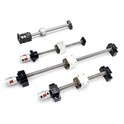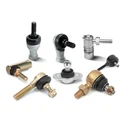

Selecting the right ball screw is crucial for ensuring the performance and service life of mechanical equipment. The first step in selection is to determine the required load capacity, which includes axial load and radial load. Although ball screws are mainly designed to bear axial loads, excessive radial loads can cause additional wear and reduce precision, so it is necessary to calculate the actual load based on the equipment's working conditions.
Another key parameter is the lead (pitch) of the ball screw. The lead refers to the distance the nut moves linearly when the screw shaft rotates one full turn. A larger lead results in a higher linear speed under the same rotational speed, which is suitable for equipment requiring fast movement, such as automated assembly lines. A smaller lead, on the other hand, provides higher positioning accuracy, making it ideal for precision machining equipment like CNC milling machines.
The length of the ball screw also needs to be carefully considered. It should match the stroke of the equipment's moving parts, and a certain margin should be reserved to avoid installation issues. Additionally, the rigidity of the ball screw is an important factor-insufficient rigidity can lead to deformation under load, affecting the equipment's positioning accuracy. Therefore, when selecting, it is necessary to check the rigidity parameters provided by the manufacturer and ensure they meet the application requirements.
In terms of maintenance, regular lubrication is essential. Lubricating oil or grease can form a protective film on the surface of the balls and thread grooves, reducing friction and preventing corrosion. It is recommended to lubricate the ball screw every 200 - 500 operating hours, depending on the working environment. For dusty or humid environments, a dust cover or protective sleeve should be installed to prevent impurities from entering the thread grooves, which can cause severe wear and shorten the service life.
Regular inspection is also important. During inspection, check for signs of wear, such as scratches on the screw shaft or abnormal noise during operation. If any problems are found, timely replacement or repair is required to avoid further damage to the equipment.