


Rod Ends Bearing
Your Professional Rod Ends Bearing Supplier
Lishui Hengyuan Bearing Manufacturing Co., Ltd. was established in 2008 and is located at No. 11 Ye'ao Road, Lishui Economic Development Zone. The company’s main products include rod end spherical bearings, radial spherical bearings, linear bearings, linear guides, ball screws, needle roller bearings, and other related products. Our products have been exported for many years to Europe, America, and Southeast Asia.
Our Certificates
We have obtained ISO9001 certification and have been recognized as a national high-tech enterprise, a specialized and innovative small and medium-sized enterprise, a technology-based SME, and have received intellectual property management system certification.
Our Services
We provide technical support and can assist customers with product selection, testing, and solving various issues during experiments. In addition, we offer customized product configuration solutions tailored to your specific needs.
Production Market
Our products are exported to markets in Europe, America, and Southeast Asia. We have established long-term cooperative relationships with HAAS Automation Inc. in the USA and with Wode Group's agricultural machinery and equipment division in China.


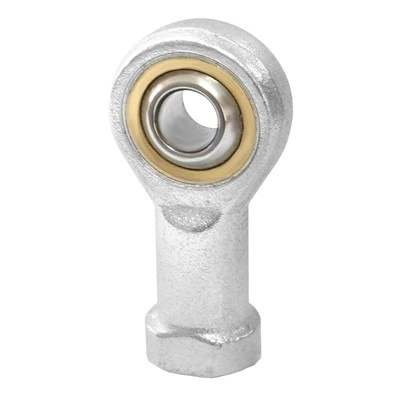
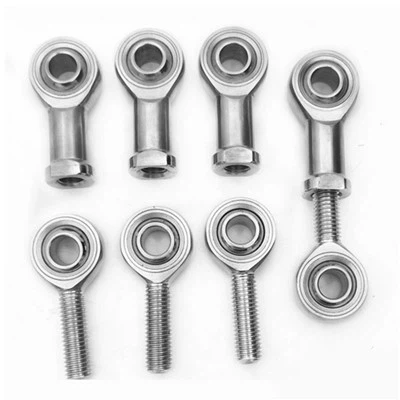
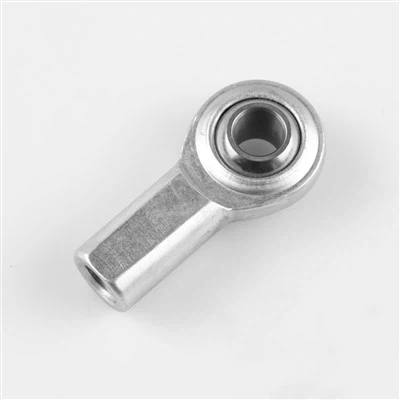


Rod Ends Bearing
The Rod End is a self-aligning plain bearing that uses a spherical inner ring which has the same level of accuracy and hardness as bearing steel balls. With the combination of a spherical inner ring whose sliding surface is mirror-finished and a rationally designed holder, the Rod End ensures playfree, extremely smooth rotation and oscillation.
Product Highlights
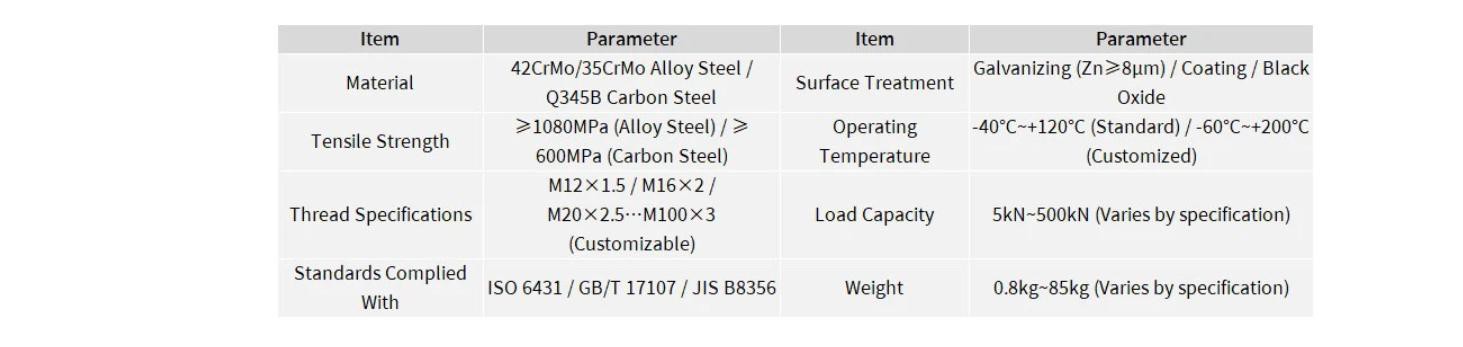
High-Strength & Durable Design
Forged from high-quality alloy steel with quenching and tempering treatment, tensile strength increased by 30%, excellent anti-fatigue performance, suitable for high-frequency heavy-load working conditions.
Multi-Specification Quick Adaptation
Compliant with international/national standards such as ISO, JIS, GB, providing M12~M100 thread specifications and customized non-standard designs to meet installation requirements for different cylinder models.
Precise Machining Accuracy
Key dimensions controlled within ±0.02mm, surface roughness of mating surface Ra≤1.6μm, ensuring perfect fit with cylinder pins and joint bearings, reducing operation noise and wear.
Full-Procedure Anti-Corrosion Treatment
Surface treated with galvanizing (Zn≥8μm) or environmentally friendly anti-corrosion coating, salt spray test ≥1000 hours, suitable for harsh environments such as humidity, dust, acid and alkali.
Technical Parameters
|
Dimensions in millimeters |
Load ratings |
Weig |
|||||||
|
d |
D |
B |
C |
dk |
r |
a |
dyn |
stat. |
|
|
C(KN) |
C.(KN) |
≈kg |
|||||||
|
4-0.008 |
12-0.008 |
5-0.12 |
3-0.24 |
8 |
0.3 |
16 |
2.1 |
5.4 |
0.003 |
|
5-0.008 |
14-0.008 |
6-0.12 |
4-0.24 |
10 |
0.3 |
13 |
3.6 |
9 |
0.004 |
|
6-0.008 |
14-0.008 |
6-0.12 |
4-0.24 |
10 |
0.3 |
13 |
3.6 |
9 |
0.005 |
|
8-0.008 |
16-0.008 |
8-0.12 |
5-0.24 |
13 |
0.3 |
15 |
5.8 |
14.6 |
0.008 |
|
10-0.008 |
19-0.009 |
9-0.12 |
6-0.24 |
16 |
0.3 |
12 |
8.6 |
21.6 |
0.011 |
|
12-0.008 |
22-0.009 |
10-0.12 |
7-0.24 |
18 |
0.3 |
11 |
11.5 |
28.5 |
0.016 |
|
15-0.008 |
26-0.009 |
12-0.12 |
9-0.24 |
22 |
0.3 |
8 |
17.5 |
44 |
0.027 |
|
17-0.008 |
30-0.009 |
14-0.12 |
10-0.24 |
25 |
0.3 |
10 |
22.5 |
56 |
0.041 |
|
20-0.01 |
35-0.011 |
16-0.12 |
12-0.24 |
29 |
0.3 |
9 |
31.5 |
78 |
0.066 |
|
25-0.01 |
42-0.011 |
20-0.12 |
16-0.24 |
35.5 |
0.3 |
7 |
51 |
127 |
0.119 |
|
30-0.01 |
47-0.011 |
22-0.12 |
18-0.24 |
40.7 |
0.3 |
6 |
66 |
166 |
0.163 |
Benefits of Rod Ends Bearing
Compensation for misalignment
Rod ends are uniquely designed to handle angular misalignments in mechanical linkages. This capability allows them to absorb installation errors, structural deflections, and dynamic movements, ensuring smooth operation even when components are not perfectly aligned. This flexibility reduces the risk of premature wear and damage to connected parts.
High strength and load capacity
With robust materials like high-grade steel and precision-engineered components, rod ends can support significant loads and stresses. Their design ensures reliable performance in high-load scenarios, such as in heavy machinery or automotive suspensions, where durability and strength are crucial.


Self-lubricating for reduced maintenance
Many rod ends incorporate self-lubricating features, such as Teflon® liners or thermoplastic races, which reduce the need for regular lubrication. This self-lubrication minimizes friction, lowers wear rates, and extends the component’s life, making rod ends particularly advantageous in applications with limited maintenance access.
Noise and vibration dampening
Some rod ends include elastomeric bearings or specialized liners that absorb vibrations and reduce noise. This is especially beneficial in dynamic systems like engines or moving machinery, where minimizing vibrations enhances performance, reduces noise pollution, and prevents damage from repetitive stresses.
What are the Components of Rod Ends?
Ball
The ball is the central component of a rod end. This spherical element allows the joint to rotate and pivot, enabling the necessary angular and rotational movements.
1.Typically manufactured from high-grade steel or stainless steel, chosen for their strength and resistance to corrosion. Chrome plating or other surface treatments are often applied to reduce friction and enhance durability.
2.The ball is ground to precise tolerances, generally within ±0.01 mm, ensuring smooth operation. Common ball diameters range from 5 mm to 25 mm, depending on the application.
Inner ring
The inner ring, or inner race, surrounds the ball and provides a smooth surface for its movement.
1.Usually made from case-hardened steel, which offers a good balance of toughness and wear resistance. Some variants may use specialty alloys or ceramic materials for enhanced performance.
2.The inner ring’s bore and outside diameters are precision-machined to match the ball’s size, typically ranging from 4 mm to 20 mm. Surface roughness is controlled, often with a roughness average (Ra) of 0.4 µm or better.
Outer ring (housing)
The outer ring, also known as the housing, encloses the ball and inner ring, providing the structural integrity needed for the rod end to perform under load.
1.Commonly constructed from forged steel or stainless steel, with zinc plating or other corrosion-resistant coatings. Aluminum alloys are sometimes used for lightweight applications.
2.The housing is threaded for easy mounting, with metric thread sizes typically ranging from M6 to M30. The housing may also include lubrication grooves or holes to facilitate maintenance.
Race
The race is the hardened surface within the outer ring that directly contacts the ball, allowing the rod end to handle both rotational and angular movements effectively.
1.Made from hardened steel, often treated to enhance wear resistance.
2.Precision-ground to fit tightly with the ball, ensuring minimal play and high load-carrying capacity. The hardness is usually specified between 58 to 62 HRC on the Rockwell scale.
Stud (Optional)
In some rod end designs, a stud is integrated into the outer ring, extending the mounting options.
1.Typically constructed from high-strength steel, with surface treatments such as zinc or phosphate coatings for additional corrosion resistance.
2.Studs are available in various lengths and thread sizes, conforming to ISO metric or UNC/UNF thread standards. These studs can support significant loads, depending on the material and design.
FAQ
As one of the leading rod ends bearing manufacturers in China, we warmly welcome you to wholesale cheap rod ends bearing made in China here from our factory. For customized service, contact us now.
Spherical Joint Bearing, Cylinder Earring, Rod End Joint Bearing