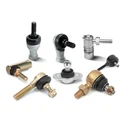

As a precision transmission element, ball screws are widely used in the industrial field, but improper storage can easily cause problems such as reduced accuracy and surface oxidation. The correct storage method can effectively extend its service life and ensure its performance, which is especially important for foreign trade practitioners and equipment maintenance personnel.
The ideal storage environment for ball screws must meet multiple conditions. First, the temperature must be maintained between 5°C and 40°C, and the humidity must be controlled within the range of 40% to 60% to avoid rust caused by high temperature and high humidity. The storage space should be kept clean and dust-free, away from areas containing corrosive substances. It is recommended to use a special moisture-proof cabinet or drying box. For long-term storage, it is recommended to apply a thin layer of anti-rust oil on the surface of the screw and then cover it with plastic film to form a double protection.
During transportation and temporary storage, care should be taken to avoid extrusion and deformation. It is recommended to place it horizontally and use pads to separate multiple layers of stacked products. If vertical storage is required, ensure that there is a support base at the bottom, and pay attention to prevent the screw body from being overloaded.
Regular inspection and maintenance are also critical. The screw should be inspected for appearance every quarter, with a focus on observing whether there are oxidation spots or signs of oil film shedding on the surface. Before reactivating after long-term storage, it is recommended to conduct a low-speed no-load running test to confirm that there is no jamming before putting it into normal use. For precision ball screws, special cleaning agents can be used with dust-free cloths to wipe them before applying new oil.
Following the above storage specifications can significantly improve the performance stability of ball screws. In international trade, correct storage knowledge has become an important part of ensuring the quality of electromechanical products. This is not only related to corporate cost control, but also directly affects the end customer's perception of product reliability.