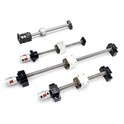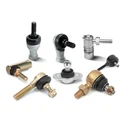

In the field of industrial manufacturing, the nut seat is an important component for connecting bolts and mechanical equipment. Its quality and precision directly affect the stability and safety of the entire equipment. Therefore, it is crucial to carry out a strict and meticulous inspection process for the nut seat.
The first is the appearance inspection. The inspector needs to carefully observe whether there are defects such as cracks, sand holes, and rust on the surface of the nut seat. These defects not only affect the beauty of the nut seat, but are also likely to become stress concentration points, leading to safety hazards such as breakage during use.
The next is the size inspection. According to the design requirements, the key dimensions of the nut seat, such as the inner diameter, outer diameter, and depth, need to be accurately measured. Commonly used measuring tools include calipers, micrometers, etc. By comparing the actual measured value with the design value, it can be ensured that the dimensional accuracy of the nut seat meets the requirements.
In addition, the detection of threads is also a crucial link. The threads of the nut seat need to fit closely with the bolts to ensure the firmness of the connection. Through tools such as thread gauges, it is possible to detect whether the thread profile, pitch, depth, etc. meet the standards.
Hardness testing and material testing should also not be ignored. The hardness of the nut seat directly affects its wear resistance and fatigue resistance, while the material quality is related to the service life of the nut seat. Professional hardness testers and material analysis equipment can accurately evaluate the hardness and material composition of the nut seat.
The last step is functional testing. Connect the nut seat with the actual bolts and equipment, conduct simulation tests, and observe its performance under actual working conditions. This link can discover potential problems in design or manufacturing and ensure that the nut seat can work stably and reliably in the real environment.
Through this series of rigorous testing processes, the quality and performance of the nut seat can be effectively guaranteed, providing strong protection for the safe and stable operation of industrial equipment.