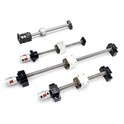

Techniques to Enhance the Competitiveness of Foreign Trade Products Using Shaft Supports
In the field of precision transmission foreign trade, shaft supports are often overlooked as mere standard parts. However, for overseas buyers, a shaft support is not just a base for fixing a linear shaft; it is a key metric for evaluating a supplier's engineering support capability, quality control level, and delivery efficiency. Skillfully leveraging shaft support strategies can effectively differentiate you from competitors.
Overseas small and medium-sized clients often lack professional mechanical design teams. The breakthrough for salespeople lies in proactively offering shaft system integration solutions.
Instead of quoting just the "shaft support unit price," provide a complete BOM including "Shaft + Support + Lock Nut." For instance, for European food machinery clients, recommend a combination of Stainless Steel Shaft Supports (SUS304) + Chrome Plated Shafts and specify the IP rating. This "turnkey" quoting approach significantly reduces the client's procurement decision cost, transforming pure price competition into a premium for technical service.
The perceived quality of shaft supports directly impacts the buyer's trust in the entire shipment.
Material Transparency: Clearly mark the casting aluminum alloy grade (e.g., A6063) or steel grade (e.g., S45C), rather than vague terms like "Aluminum/Steel."
Surface Treatment: Present thickness test reports for anodizing (e.g., >10μm) to prevent corrosion from sea salt spray during shipping.
Mounting Holes: Emphasize chamfered countersunk holes to ensure client screws do not scratch the working surface during installation.
These details are significant value-add points highly valued by premium buyers (e.g., German and Japanese clients).
During international logistics, dents and scratches on the edges of shaft supports are a common source of claims.
It is recommended to adopt a "individual box + full pearl cotton wrapping" packaging scheme, with prominent "Fragile" labels printed on the outer carton. Furthermore, for urgent orders, demonstrate "semi-finished product inventory" capability (i.e., supports are already drilled and tapped; assembly and shipment can proceed immediately upon customer confirmation of shaft length). This can shorten the delivery cycle by over 30%. Such agile supply chain responsiveness is the core leverage for securing high-margin urgent orders.