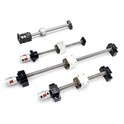

As a key component of precision machinery and automation equipment, the structural design and performance of linear guides are directly related to the accuracy and stability of the equipment. A deep understanding of the structure of linear guides will undoubtedly enhance the competitiveness of their products and expand market share for people engaged in the foreign trade industry.
Linear guides are mainly composed of rails and sliders. The rails are usually made of high-hardness, high-precision steel, and are precisely processed and quenched to ensure their straightness and wear resistance. The surface of the rails is specially treated to reduce the friction coefficient and improve the smoothness of the slider moving on the rails. This design enables linear guides to withstand heavy loads and high-speed movement while maintaining long-term stable operation.
The slider is another important component in the linear guide. It is usually made of high-strength materials and has rolling elements such as balls or rollers embedded inside. These rolling elements roll between the rails and the sliders, greatly reducing sliding friction and improving the movement efficiency of the rails. The design of the slider also focuses on absorbing and dispersing the impact and vibration during the movement to ensure the stability and service life of the equipment.
In addition to the rails and sliders, linear guides are also equipped with a sophisticated circulation system. This system ensures that the rolling elements can circulate continuously and smoothly between the rails and sliders, thereby achieving long-term, high-precision operation of the equipment.
With the rapid development of global automation and intelligent manufacturing, the demand for linear guides in the international market continues to increase. Its excellent performance and wide range of applications make it a product that has attracted much attention in the field of foreign trade. Understanding the structure and performance of linear guides is of great significance for expanding the international market and enhancing product competitiveness. Mastering relevant knowledge can not only meet customer needs, but also help companies stand out in the fierce international competition.